




Mach 7 Marketing

Our approach is designed to turn unclear marketing into a measurable business asset.

Most businesses do not struggle because they are missing another tactic, tool, or campaign idea. They struggle because they cannot clearly see what is working, what is wasting money, and what should be fixed first.

That is why we use The Click to Cashflow Compass™.

It is our framework for helping business owners turn marketing from a weekly gamble into a system they can understand, measure, and scale. Instead of guessing which ad, page, funnel, offer, or agency opinion to trust, we look for signal. Then we use that signal to guide the next move.

The goal is simple: help your clicks become conversions, and help those conversions become cashflow you can actually trust.

Using Innovative Web Testing strategies to grow your business

The Closest Thing to Certainty in Marketing

As a business owner, you probably do not want more noise in your marketing. You do not need another dashboard full of numbers nobody explains. You do not need another agency telling you to “just test more creative.” And you definitely do not need someone celebrating clicks while your margins keep getting thinner.

You need to know whether your marketing is building something real.

If every Monday feels uncertain because you do not know whether this week will cover what you spent last week, that is not just a performance issue. It is a confidence issue. If your ad account feels like a lottery where you are testing everything and learning nothing, the problem is not effort. It is lack of direction.

Most owners we work with are not afraid of hard work. They are afraid that the business only works because they refuse to stop pushing. They are afraid that if they step away, performance drops, cash tightens, and the whole thing starts to feel fragile.

That is the problem this methodology is designed to solve.

Why Click to Cashflow Exists

Clicks are easy to buy. Attention is easy to chase. Campaigns are easy to launch.

What is harder is knowing whether any of it is creating a stronger business.

A click does not matter unless it teaches you something. A conversion does not matter unless it can become profitable. And profit does not become predictable unless the system behind it is clear.

That is why we do not treat ads, landing pages, websites, email, and offers as separate pieces. We look at the whole path from first click to actual cashflow.

When that path is unclear, owners usually respond by doing more. More ads. More tests. More tools. More pages. More opinions. But more activity does not create more certainty. In many cases, it creates more noise.

The Click to Cashflow Compass™ gives us a way to slow down, find the real signal, and make the next decision based on evidence instead of pressure.

The Click to Cashflow Compass™

The framework moves through four stages:

Click → Concept → Conversion → Cashflow

Each stage answers a different question.

A click tells us whether the market is paying attention.

A concept tells us whether the message, offer, angle, or idea has enough signal to keep going.

A conversion tells us whether that signal can turn into action.

Cashflow tells us whether the system is worth scaling.

Most businesses rush this process. They try to scale before the concept is proven. They change too many things at once. They judge success from surface metrics. Or they keep spending because stopping would force them to admit they do not know what is actually working.

We do the opposite.

We do not move to the next stage until the current one gives us enough clarity to justify it.

Phase 1: Click to Conversion

The first phase is about validation.

Before we build bigger funnels, scale budgets, or commit to a full marketing direction, we need to separate good ideas from profitable ones. This is where paid ad testing, microtesting, and minimum viable concepts come in.

The goal is not to test randomly. The goal is to learn quickly.

We look for which pain statements, offers, angles, messages, and page components create real market response. This helps us avoid building expensive campaigns around ideas that sound good in a meeting but fail when real people have to click, read, trust, and act.

For a business spending money on ads, this phase creates direction. It shows what deserves more investment and what should be cut before it drains more budget.

By the end of this phase, you should not be asking, “What should we try next?” You should have a clearer answer to, “What is the market already telling us?”

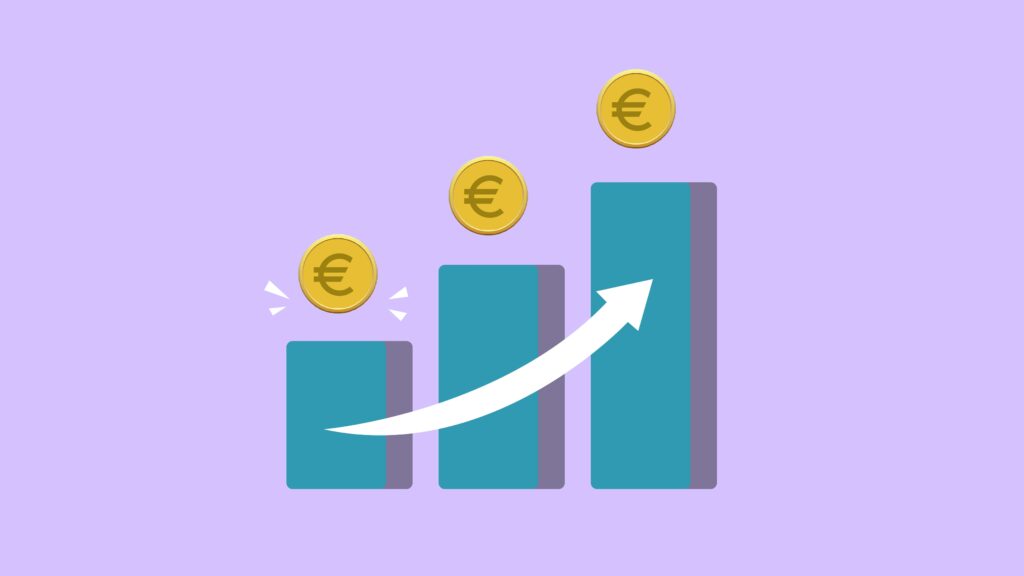
Vector illustration of income growth chart with arrow and euro coins against purple background
cro, conversion rate optimization, digital marketing, cro, cro, cro, cro, cro

Phase 2: Conversion to Cashflow

Once we find signal, the next job is to turn it into something stronger.

This is where we focus on conversion rate optimization, A/B testing, website optimization, funnel clarity, and email systems. But we are not optimizing for vanity metrics. We are looking at the full path between traffic, trust, conversion, revenue, and margin.

A lot of businesses assume the landing page is the problem. Sometimes it is. But sometimes the real issue is the offer. Or the traffic. Or the message. Or the follow-up. Or the fact that five things changed at once and nobody can tell what made the difference.

Phase 2 is about finding the leak and fixing it in the right order.

The goal is not just more conversions. The goal is more confidence in the system behind those conversions. When that happens, you can scale what is proven instead of gambling on what is loudest.

Why Most Marketing Stays Stuck

Most marketing problems are not caused by a lack of effort. They are caused by unclear feedback loops.

Owners keep testing, but the tests do not teach them anything. They spend more, but the spend does not create more certainty. They hire agencies, but nobody connects performance back to profit. They rebuild pages, launch new campaigns, or install new tools without knowing whether those moves address the real bottleneck.

That is how marketing becomes fragile.

It works when everything goes right. It works when the owner keeps watching. It works when ad costs stay manageable. But the moment conditions shift, the business feels exposed.

Our methodology is built to reduce that fragility.

We want each move to create more clarity, more proof, and more confidence in what should happen next.

What This Means for You

When your marketing has a clear system, you stop reacting to every bad day like it is a crisis.

You know which numbers matter. You know what is being tested. You know what decision a test is supposed to inform. You know whether you are on pace, ahead of pace, or behind pace toward the goal.

That does not mean marketing becomes effortless. It means it becomes manageable.

Instead of treating your ad account like a lottery, you are building a business asset. Instead of hoping the next campaign fixes everything, you are improving the path from click to cashflow one validated step at a time.

That is the difference between marketing activity and marketing direction.

Start With Your Score

The easiest place to begin is by finding where your current marketing system is leaking.

Take the free Marketing Scorecard to see what is unclear, what is costing you money, and what should be fixed first.

Discover the Path to Your First Win - Free Audit of Your Leading Webpage

Taking the first steps can be challenging – let us ease the journey. Receive a detailed audit to discover your next moves, and experience a taste of collaboration with us, all without any obligation.

Why Point-Based Pricing

We get many questions about our point-based system, because well it is different – not difficult. In fact, once our clients understand the advantages of working with an agency, they often wonder why other agencies don’t do the same. 

What am I really buying when I buy points?

You can’t look at it as buying hours from us; you are buying project deliverables and the value they produce. To quantify this value, we use points as the unit of exchange. 

 We bid out the projects using a calculator, so each project is based not only on time but also on value. Meaning we may spend a decent amount of time doing a simple and inexpensive task, but instead of charting you an outrageous rate, we pass those savings on to you. 

This value-based pricing is important because, as our client, you will have several services from web20ranker.com that are done through the month between marketing strategy, SEO, Web Development, Design, data entry, reporting, and more. Why should be charted a developer rate when reporting tasks like pulling reports and data entry don’t require the same tools and expertise?  

You might ask, well, why don’t you bill each task according to how long it takes? We will explain why, as well as all of the advantages of point-based projects.

Advantage of Point-Based Pricing

  • Simplified bills and accounting procedures for you and us
  • Keeps work on time and in budget
  • Purchasing results not “busy hours
  • Projects are more agile

 Itemizing each task into 15-minute intervals with accurate hourly rates would create a lot of overhead, headache, and extra work – all decreasing our results’ efficiency. 

This complex billing process will make it harder to give accurate estimates, and when the work is finally agreed upon and done, you get a bill so complex that no one wants to take the time to try and understand. If you have to explain this type to a superior, they don’t want long answers; they want simple solutions. 

Keeps work on time and in budget

 We bid each project to the month prior, and an advantage to you is if we estimate wrong and it takes us longer than expected, you don’t have to pay for those extra costs. In the cases we finish early, we keep working and move down to the next item on your project wishlist, where the projects are prioritized on impact and effort. It is like having the benefits of an efficient employee without having to pay payroll. 

This is why it is point pricing is better than hourly rates. When have you seen a web or programming test ever come in on time and on a budget from the initial quote? Let’s say it takes an additional four days to complete most agencies will stop the project and say, hey, we can take a short cut and finish in one day or take an extra four days for an additional price of how many hours they charge you. That is if your lucky, some agencies will finish the work and then charge you for that time whether you asked for it or not. Regardless, Your project is now late, you miss out on any lift it could have generated in those days, and it cost you extra money. 

Now let’s look at this example through the lenses of value-based pricing and how we do things at Mach 7. If we bid on a project wrong and take us four extra hours, we eat those costs. You are paying for value, not hours.

 Each month before working, we review your project, and if a project we added to the wishlist originally was 4 points but needs to be 6, we will let you know before starting. Let say we start the project, and it really took us the time and effort to be 8 points well, we estimated wrong, and that is our bad. We don’t go around and bill you for those extra points. Our goal is to dive you deliverables that drive results and ROI.

Quick disclaimer, the above is the scenario if we bid the project wrong if there is some challenge on your end or a technical error, we generally will try and fix it first. Still, if it is an excess of over 10 hours, we will probably need to make a compromise. Always, it will likely be easier and more efficient than trying to negotiate additional hours. 

Purchasing results not “busy” hours

The point-based system not only simplifies billing but saves you money by you not paying for hours for us to pitter around looking busy but rather have us focus on productivity bringing your company more value.

Let’s face it most people who are paid by the hour don’t focus on being productive; they focus on being busy – which usually generates more hours and a bigger bill. We are not saying that agencies try and rob you of your money (okay, some do but not a lot), but even for all of those agencies that really try and give as much value as they can unintentionally fall victim to this trap because they are not incentivized to get it done as soon as they can. If the probability of the “extra task they do for you to fill the time so they still get a full check probably isn’t as valuable as the rest of the project. 

Agile Projects

 This model is also very agile, allowing us to adapt to your needs and requests in a timely matter and helps both you and us stay focus on the goals at hand.

This agility comes from how we use the wishlist. If something occurs Mid-month, as long as the work has not started, if you need to switch items based on company goals or a crisis, it’s easy to do so. No extra fees or an excessive amount of time, making sure your dollars are being put to work towards your company’s goals and objectives.

Let do a hypothetical example we charge you. $15 

for data entry and $100 for web or $80 marketing and $50 for project management. This would be a huge hassle and make billing and planning a headache. Not to mention increased project management and overhead costs.

What about discounts?

This price is a discounted price per point if you agree to 3 or 6-month terms of service. If you want additional points for one month but not every month, then additional points may be purchased at $44 a point. For prospects looking at one-time projects and no contract or commitment to future projects, we bill at $50 a point. 

Conclusion

We hope that helps explains our system better and how it saves and provides value to our clients. Regardless if you found the information helpful, you can click the button below and see a sample of our pricing grid. These are not exact point values as we look for ways to save you money, and specific industries may require additional work. The pricing grid should be used as a guide, not law, kind of like the Pirates Code. 

Share the Post:

Related Posts

Ready to Skyrocket Your Conversions?

We use a variety of digital mediums to increase web presence and generate leads.