



Mach 7 Marketing

Our approach is designed to turn unclear marketing into a measurable business asset.

Most businesses do not struggle because they are missing another tactic, tool, or campaign idea. They struggle because they cannot clearly see what is working, what is wasting money, and what should be fixed first.

That is why we use The Click to Cashflow Compass™.

It is our framework for helping business owners turn marketing from a weekly gamble into a system they can understand, measure, and scale. Instead of guessing which ad, page, funnel, offer, or agency opinion to trust, we look for signal. Then we use that signal to guide the next move.

The goal is simple: help your clicks become conversions, and help those conversions become cashflow you can actually trust.

Using Innovative Web Testing strategies to grow your business

The Closest Thing to Certainty in Marketing

As a business owner, you probably do not want more noise in your marketing. You do not need another dashboard full of numbers nobody explains. You do not need another agency telling you to “just test more creative.” And you definitely do not need someone celebrating clicks while your margins keep getting thinner.

You need to know whether your marketing is building something real.

If every Monday feels uncertain because you do not know whether this week will cover what you spent last week, that is not just a performance issue. It is a confidence issue. If your ad account feels like a lottery where you are testing everything and learning nothing, the problem is not effort. It is lack of direction.

Most owners we work with are not afraid of hard work. They are afraid that the business only works because they refuse to stop pushing. They are afraid that if they step away, performance drops, cash tightens, and the whole thing starts to feel fragile.

That is the problem this methodology is designed to solve.

Why Click to Cashflow Exists

Clicks are easy to buy. Attention is easy to chase. Campaigns are easy to launch.

What is harder is knowing whether any of it is creating a stronger business.

A click does not matter unless it teaches you something. A conversion does not matter unless it can become profitable. And profit does not become predictable unless the system behind it is clear.

That is why we do not treat ads, landing pages, websites, email, and offers as separate pieces. We look at the whole path from first click to actual cashflow.

When that path is unclear, owners usually respond by doing more. More ads. More tests. More tools. More pages. More opinions. But more activity does not create more certainty. In many cases, it creates more noise.

The Click to Cashflow Compass™ gives us a way to slow down, find the real signal, and make the next decision based on evidence instead of pressure.

The Click to Cashflow Compass™

The framework moves through four stages:

Click → Concept → Conversion → Cashflow

Each stage answers a different question.

A click tells us whether the market is paying attention.

A concept tells us whether the message, offer, angle, or idea has enough signal to keep going.

A conversion tells us whether that signal can turn into action.

Cashflow tells us whether the system is worth scaling.

Most businesses rush this process. They try to scale before the concept is proven. They change too many things at once. They judge success from surface metrics. Or they keep spending because stopping would force them to admit they do not know what is actually working.

We do the opposite.

We do not move to the next stage until the current one gives us enough clarity to justify it.

Phase 1: Click to Conversion

The first phase is about validation.

Before we build bigger funnels, scale budgets, or commit to a full marketing direction, we need to separate good ideas from profitable ones. This is where paid ad testing, microtesting, and minimum viable concepts come in.

The goal is not to test randomly. The goal is to learn quickly.

We look for which pain statements, offers, angles, messages, and page components create real market response. This helps us avoid building expensive campaigns around ideas that sound good in a meeting but fail when real people have to click, read, trust, and act.

For a business spending money on ads, this phase creates direction. It shows what deserves more investment and what should be cut before it drains more budget.

By the end of this phase, you should not be asking, “What should we try next?” You should have a clearer answer to, “What is the market already telling us?”

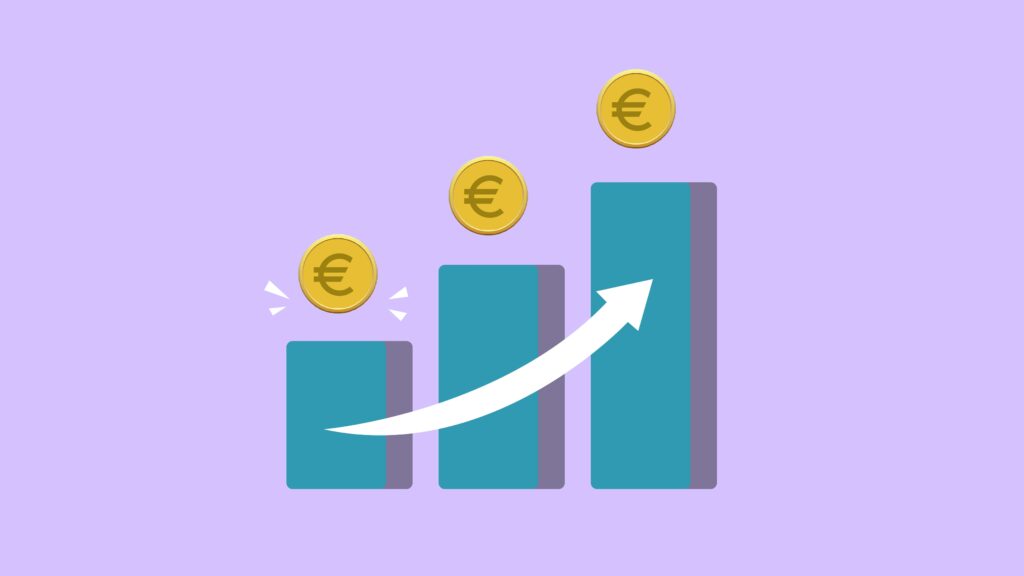
Vector illustration of income growth chart with arrow and euro coins against purple background
cro, conversion rate optimization, digital marketing, cro, cro, cro, cro, cro

Phase 2: Conversion to Cashflow

Once we find signal, the next job is to turn it into something stronger.

This is where we focus on conversion rate optimization, A/B testing, website optimization, funnel clarity, and email systems. But we are not optimizing for vanity metrics. We are looking at the full path between traffic, trust, conversion, revenue, and margin.

A lot of businesses assume the landing page is the problem. Sometimes it is. But sometimes the real issue is the offer. Or the traffic. Or the message. Or the follow-up. Or the fact that five things changed at once and nobody can tell what made the difference.

Phase 2 is about finding the leak and fixing it in the right order.

The goal is not just more conversions. The goal is more confidence in the system behind those conversions. When that happens, you can scale what is proven instead of gambling on what is loudest.

Why Most Marketing Stays Stuck

Most marketing problems are not caused by a lack of effort. They are caused by unclear feedback loops.

Owners keep testing, but the tests do not teach them anything. They spend more, but the spend does not create more certainty. They hire agencies, but nobody connects performance back to profit. They rebuild pages, launch new campaigns, or install new tools without knowing whether those moves address the real bottleneck.

That is how marketing becomes fragile.

It works when everything goes right. It works when the owner keeps watching. It works when ad costs stay manageable. But the moment conditions shift, the business feels exposed.

Our methodology is built to reduce that fragility.

We want each move to create more clarity, more proof, and more confidence in what should happen next.

What This Means for You

When your marketing has a clear system, you stop reacting to every bad day like it is a crisis.

You know which numbers matter. You know what is being tested. You know what decision a test is supposed to inform. You know whether you are on pace, ahead of pace, or behind pace toward the goal.

That does not mean marketing becomes effortless. It means it becomes manageable.

Instead of treating your ad account like a lottery, you are building a business asset. Instead of hoping the next campaign fixes everything, you are improving the path from click to cashflow one validated step at a time.

That is the difference between marketing activity and marketing direction.

Start With Your Score

The easiest place to begin is by finding where your current marketing system is leaking.

Take the free Marketing Scorecard to see what is unclear, what is costing you money, and what should be fixed first.

Discover the Path to Your First Win - Free Audit of Your Leading Webpage

Taking the first steps can be challenging – let us ease the journey. Receive a detailed audit to discover your next moves, and experience a taste of collaboration with us, all without any obligation.

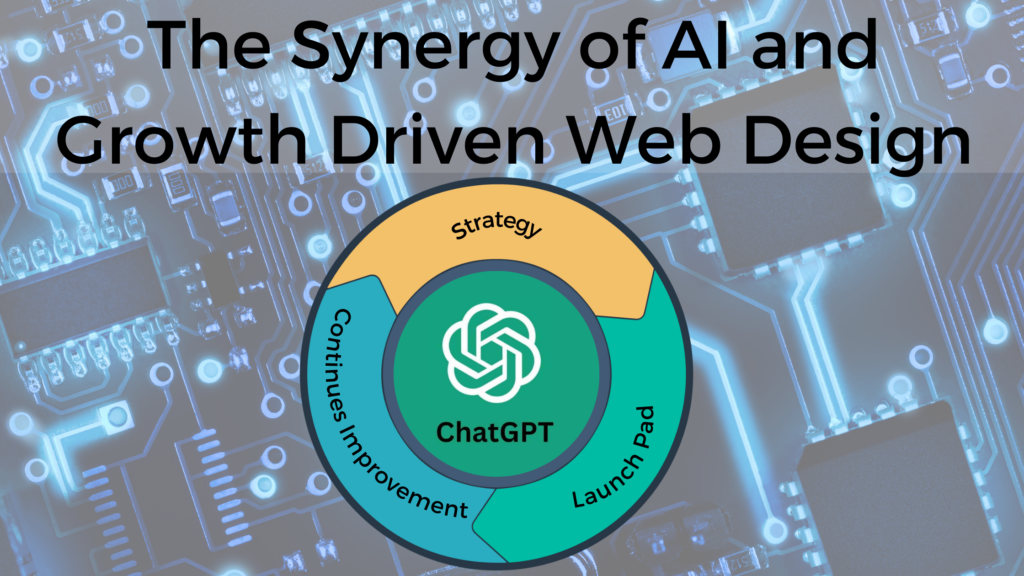
How to use AI and Growth Driven Web Design Strategy Together

Boosting Growth-Driven Web Design and Testing Strategies with ChatGPT

Today’s businesses strive to create websites that capture their brand’s essence and adapt to their audience’s dynamic preferences. This is where Growth-Driven Web Design (GDD) shines as a paradigm shift in web development philosophy. In this article, we will explore the vital role of ChatGPT in enhancing GDD and testing strategies, from A/B testing to Micro Testing, and how it propels websites into the future.

The Role of AI in Growth-Driven Web Design (GDD):

Growth-Driven Web Design (GDD) is a concept that acknowledges that a website is never truly finished but should continuously evolve to meet user needs and market trends. It emphasizes the creation of a “launchpad” site – a functional yet adaptable foundation that allows for data-driven improvements. But how does ChatGPT fit into this picture?

ChatGPT, powered by AI, plays a pivotal role in the evolution of web design. Its capabilities extend to generating dynamic content, facilitating real-time interactions, and adapting to user behavior. In a GDD framework, where constant iteration is the norm, ChatGPT becomes an invaluable asset.

Imagine a scenario where a website needs to update its product descriptions and blog posts to reflect the latest industry trends. ChatGPT can swiftly generate relevant content, ensuring that the site remains up-to-date and engaging for visitors. Moreover, it can provide personalized recommendations and answers to user inquiries, creating a dynamic user experience.

ChatGPT in A/B Testing:

A/B testing, a cornerstone of web optimization, involves comparing two versions of a webpage or element to determine which performs better. This testing strategy is essential for enhancing user experience and achieving conversion goals. ChatGPT’s capabilities seamlessly integrate into A/B testing processes.

Consider a situation where an e-commerce website wants to test different product descriptions to determine which drives more conversions. ChatGPT can assist in generating variations of these descriptions, ensuring they are not only compelling but also aligned with current market trends and customer preferences. Additionally, ChatGPT can analyze user feedback and suggest further improvements, streamlining the A/B testing process.

Micro Testing with ChatGPT: Elevating Precision in Decision-Making:

Micro testing takes the concept of testing and applies it on a smaller scale, focusing on fine-tuning website details for optimal performance. While A/B testing compares major variations, micro testing hones in on nuanced elements. ChatGPT’s capabilities align perfectly with micro testing objectives.

Imagine a scenario where a news website wants to optimize the headlines of its articles to increase click-through rates. Micro testing can involve testing different headline variations. ChatGPT can not only generate these variations but also provide insights into the psychology of effective headlines, helping to pinpoint the most engaging options.

What sets ChatGPT apart in the realm of micro testing is its ability to understand user intent and sentiment. It can analyze user comments and interactions to gauge which elements resonate with the audience. By incorporating ChatGPT-driven insights, businesses can make precise adjustments that elevate the user experience.

This combination of AI-powered capabilities and data-driven insights makes ChatGPT an indispensable tool for both A/B testing and micro testing. However, it’s essential to recognize that A/B testing and Micro Testing should not be viewed as competing strategies but rather as complementary approaches that, when used in tandem, yield the most significant impact.

Seamless Integration of ChatGPT in Growth-Driven Web Design:

One of the fundamental principles of Growth-Driven Web Design (GDD) is the continuous improvement of a website. GDD challenges the traditional concept of a “finished” website, recognizing that user preferences, market trends, and technological advancements evolve rapidly. A GDD approach involves creating a “launchpad” site that serves as a foundation but is open to continuous refinement based on data-driven insights.

ChatGPT, with its real-time content generation capabilities, is the ideal companion for GDD. It enables websites to evolve dynamically and respond swiftly to changing circumstances. For example, if user feedback indicates a need for additional content on a specific topic, ChatGPT can generate articles or blog posts that cater to those interests, ensuring that the website stays relevant and engaging.

Moreover, ChatGPT can personalize user experiences by providing tailored recommendations, answering inquiries, and offering real-time assistance. This level of personalization not only enhances user engagement but also fosters a sense of connection and responsiveness.

The Future of Growth-Driven Web Design and Testing: AI-Powered Innovation:

As we gaze into the future of web development and marketing, it’s evident that AI-powered innovation will continue to be a driving force. AI tools like ChatGPT are becoming essential assets for businesses aiming to remain competitive and agile.

AI’s role in A/B testing, micro testing, and GDD will expand as these methodologies become even more data-centric. ChatGPT’s natural language understanding capabilities will become more refined, allowing for deeper insights into user behavior and preferences. As a result, businesses can make more informed decisions to optimize their websites and marketing campaigns.

Furthermore, AI-driven automation will play a substantial role in scaling up testing efforts. ChatGPT can assist in generating variations for extensive A/B testing scenarios, saving time and resources. This enables businesses to conduct comprehensive testing on a broader scale and make improvements more efficiently.

Certainly, here’s an additional section that emphasizes the importance of a proven process and the human touch alongside AI:

The Synergy of AI and Human Expertise: A Winning Combination:

While AI, exemplified by ChatGPT, offers remarkable capabilities in web design and testing, it’s essential to recognize that AI is a tool, not a standalone solution. The human element remains irreplaceable in crafting a holistic and successful digital strategy.

AI excels at processing vast amounts of data, generating content, and providing insights. However, it’s human creativity, strategic thinking, and domain expertise that give direction to AI’s capabilities. The synergy between AI and human expertise creates a winning combination.

A proven process and human touch are necessary to harness the full potential of AI. Human experts bring a deep understanding of brand identity, market dynamics, and user behavior. They define the strategic objectives, set the parameters for testing, and interpret AI-generated insights.

Moreover, the human touch adds the crucial element of empathy and emotional intelligence. It’s humans who understand the nuances of user sentiment, who can craft compelling narratives, and who can make strategic decisions based on more than just data points. The human touch ensures that AI’s outputs align with the brand’s values and resonate with the audience on a deeper level.

In the world of Growth-Driven Web Design, A/B testing, and Micro Testing, AI and human expertise should be viewed as partners, not competitors. While AI accelerates processes and provides valuable insights, human experts steer the ship, ensuring that the course is aligned with the brand’s vision and goals.

As we navigate the digital frontier, remember that the most successful strategies combine the precision of AI with the creativity, strategy, and empathy of human experts. It’s in this synergy that we find the formula for achieving maximum results and true digital excellence.

Share the Post:

Related Posts

Ready to Skyrocket Your Conversions?

We use a variety of digital mediums to increase web presence and generate leads.