



Mach 7 Marketing

Our approach is designed to turn unclear marketing into a measurable business asset.

Most businesses do not struggle because they are missing another tactic, tool, or campaign idea. They struggle because they cannot clearly see what is working, what is wasting money, and what should be fixed first.

That is why we use The Click to Cashflow Compass™.

It is our framework for helping business owners turn marketing from a weekly gamble into a system they can understand, measure, and scale. Instead of guessing which ad, page, funnel, offer, or agency opinion to trust, we look for signal. Then we use that signal to guide the next move.

The goal is simple: help your clicks become conversions, and help those conversions become cashflow you can actually trust.

Using Innovative Web Testing strategies to grow your business

The Closest Thing to Certainty in Marketing

As a business owner, you probably do not want more noise in your marketing. You do not need another dashboard full of numbers nobody explains. You do not need another agency telling you to “just test more creative.” And you definitely do not need someone celebrating clicks while your margins keep getting thinner.

You need to know whether your marketing is building something real.

If every Monday feels uncertain because you do not know whether this week will cover what you spent last week, that is not just a performance issue. It is a confidence issue. If your ad account feels like a lottery where you are testing everything and learning nothing, the problem is not effort. It is lack of direction.

Most owners we work with are not afraid of hard work. They are afraid that the business only works because they refuse to stop pushing. They are afraid that if they step away, performance drops, cash tightens, and the whole thing starts to feel fragile.

That is the problem this methodology is designed to solve.

Why Click to Cashflow Exists

Clicks are easy to buy. Attention is easy to chase. Campaigns are easy to launch.

What is harder is knowing whether any of it is creating a stronger business.

A click does not matter unless it teaches you something. A conversion does not matter unless it can become profitable. And profit does not become predictable unless the system behind it is clear.

That is why we do not treat ads, landing pages, websites, email, and offers as separate pieces. We look at the whole path from first click to actual cashflow.

When that path is unclear, owners usually respond by doing more. More ads. More tests. More tools. More pages. More opinions. But more activity does not create more certainty. In many cases, it creates more noise.

The Click to Cashflow Compass™ gives us a way to slow down, find the real signal, and make the next decision based on evidence instead of pressure.

The Click to Cashflow Compass™

The framework moves through four stages:

Click → Concept → Conversion → Cashflow

Each stage answers a different question.

A click tells us whether the market is paying attention.

A concept tells us whether the message, offer, angle, or idea has enough signal to keep going.

A conversion tells us whether that signal can turn into action.

Cashflow tells us whether the system is worth scaling.

Most businesses rush this process. They try to scale before the concept is proven. They change too many things at once. They judge success from surface metrics. Or they keep spending because stopping would force them to admit they do not know what is actually working.

We do the opposite.

We do not move to the next stage until the current one gives us enough clarity to justify it.

Phase 1: Click to Conversion

The first phase is about validation.

Before we build bigger funnels, scale budgets, or commit to a full marketing direction, we need to separate good ideas from profitable ones. This is where paid ad testing, microtesting, and minimum viable concepts come in.

The goal is not to test randomly. The goal is to learn quickly.

We look for which pain statements, offers, angles, messages, and page components create real market response. This helps us avoid building expensive campaigns around ideas that sound good in a meeting but fail when real people have to click, read, trust, and act.

For a business spending money on ads, this phase creates direction. It shows what deserves more investment and what should be cut before it drains more budget.

By the end of this phase, you should not be asking, “What should we try next?” You should have a clearer answer to, “What is the market already telling us?”

Vector illustration of income growth chart with arrow and euro coins against purple background
cro, conversion rate optimization, digital marketing, cro, cro, cro, cro, cro

Phase 2: Conversion to Cashflow

Once we find signal, the next job is to turn it into something stronger.

This is where we focus on conversion rate optimization, A/B testing, website optimization, funnel clarity, and email systems. But we are not optimizing for vanity metrics. We are looking at the full path between traffic, trust, conversion, revenue, and margin.

A lot of businesses assume the landing page is the problem. Sometimes it is. But sometimes the real issue is the offer. Or the traffic. Or the message. Or the follow-up. Or the fact that five things changed at once and nobody can tell what made the difference.

Phase 2 is about finding the leak and fixing it in the right order.

The goal is not just more conversions. The goal is more confidence in the system behind those conversions. When that happens, you can scale what is proven instead of gambling on what is loudest.

Why Most Marketing Stays Stuck

Most marketing problems are not caused by a lack of effort. They are caused by unclear feedback loops.

Owners keep testing, but the tests do not teach them anything. They spend more, but the spend does not create more certainty. They hire agencies, but nobody connects performance back to profit. They rebuild pages, launch new campaigns, or install new tools without knowing whether those moves address the real bottleneck.

That is how marketing becomes fragile.

It works when everything goes right. It works when the owner keeps watching. It works when ad costs stay manageable. But the moment conditions shift, the business feels exposed.

Our methodology is built to reduce that fragility.

We want each move to create more clarity, more proof, and more confidence in what should happen next.

What This Means for You

When your marketing has a clear system, you stop reacting to every bad day like it is a crisis.

You know which numbers matter. You know what is being tested. You know what decision a test is supposed to inform. You know whether you are on pace, ahead of pace, or behind pace toward the goal.

That does not mean marketing becomes effortless. It means it becomes manageable.

Instead of treating your ad account like a lottery, you are building a business asset. Instead of hoping the next campaign fixes everything, you are improving the path from click to cashflow one validated step at a time.

That is the difference between marketing activity and marketing direction.

Start With Your Score

The easiest place to begin is by finding where your current marketing system is leaking.

Take the free Marketing Scorecard to see what is unclear, what is costing you money, and what should be fixed first.

Discover the Path to Your First Win - Free Audit of Your Leading Webpage

Taking the first steps can be challenging – let us ease the journey. Receive a detailed audit to discover your next moves, and experience a taste of collaboration with us, all without any obligation.

The Power of Testing Your Offer: A Lesson from My Early Mistakes

When I first started, I made a critical mistake that cost me time and money: I assumed everyone wanted audits of their websites. This wasn’t the reality – well unless they wanted them for free. Through running a micro test, I discovered that most people preferred checklists and action plans. This simple change not only attracted more leads but also saved me significant time and money.

The Importance of Testing

Testing your offer is crucial. You can have the most impressive lead magnet, but if your offer on the thank you page or in your email sequence isn’t compelling or relevant, you’re likely wasting your marketing budget. My experience underscores the importance of aligning your offers with what your audience truly wants. We might be good at guessing but

The Case Study

Before running my own ad funnel I spent a lot of my time doing website audits on Fiverr. I still do if you want to get one. Anyway, my assumption is if this is doing so well on Fiverr, it will work for ads, so I went right into an audit funnel and followed best practices from an in-depth article and got no results. Luckily, around this time, I discovered microtesting and tested my offer. Basically, I found that people would take free audits image O2H in the data, something I didn’t want to do because of the time, but I could share the top 5 secrets and a Excel spreadsheet (P2) and get similar results without having to create more work for myself and get similar results to a custom audit image 04 in the data

It also showed me headlines do matter. In this test, I tested different headlines with the offers, and although 04 and O2G, you can see that the offer did not work with that headline.
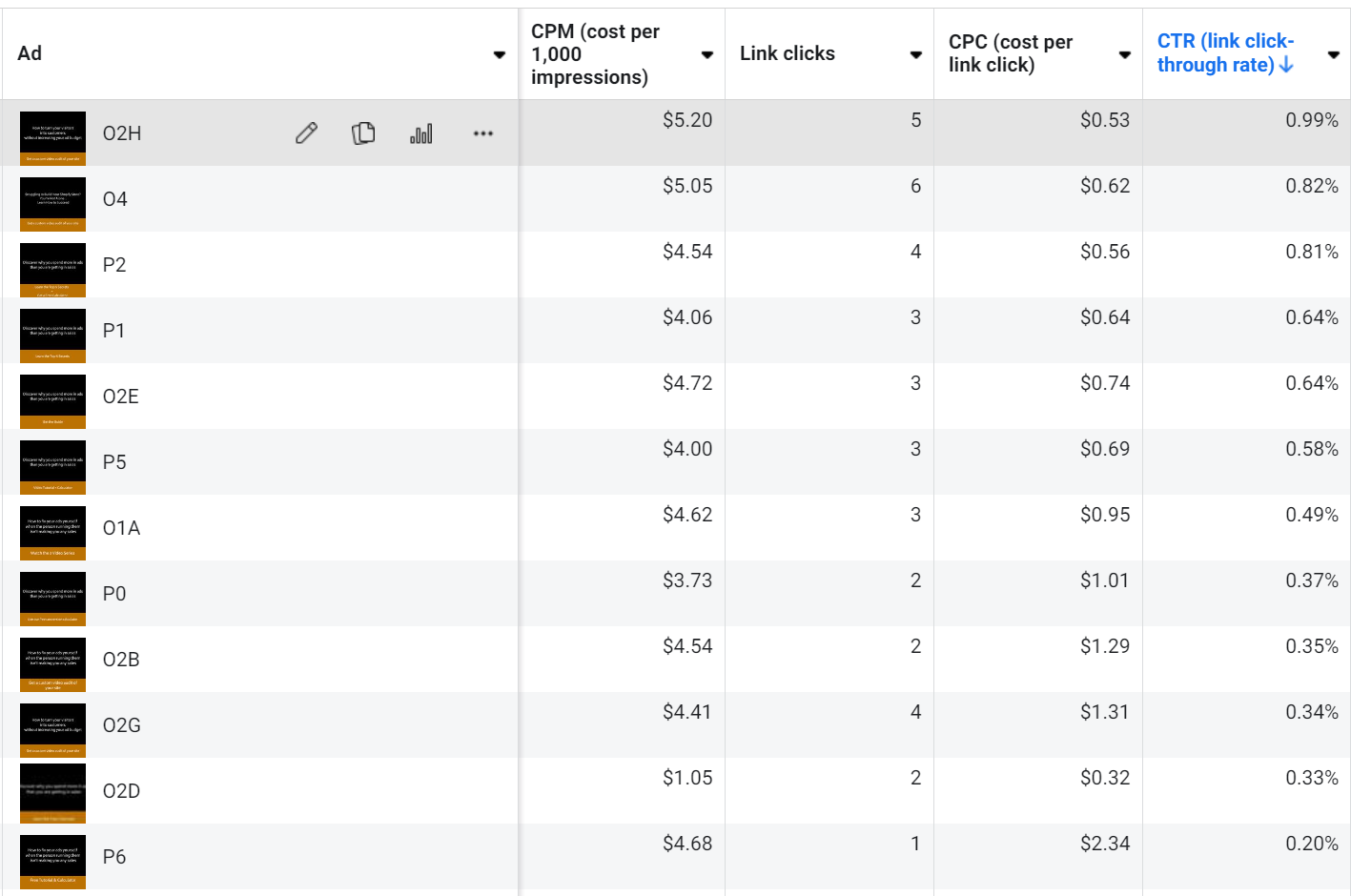

This really shows the importance of testing and getting a good headline. We need a good headline and offer fit to maximize results.

Conclusion

Remember, testing and tweaking your offers based on actual data and feedback can make a significant difference in your marketing efforts. Don’t assume—test, learn, and adapt to meet the needs of your audience more effectively. Embrace the power of micro tests to discover the true desires of your target market and adjust your strategies accordingly.

View the full case study to learn more from my mistakes and enhance your marketing strategy.

Share the Post:

Related Posts

Ready to Skyrocket Your Conversions?

We use a variety of digital mediums to increase web presence and generate leads.