



Mach 7 Marketing

Our approach is designed to turn unclear marketing into a measurable business asset.

Most businesses do not struggle because they are missing another tactic, tool, or campaign idea. They struggle because they cannot clearly see what is working, what is wasting money, and what should be fixed first.

That is why we use The Click to Cashflow Compass™.

It is our framework for helping business owners turn marketing from a weekly gamble into a system they can understand, measure, and scale. Instead of guessing which ad, page, funnel, offer, or agency opinion to trust, we look for signal. Then we use that signal to guide the next move.

The goal is simple: help your clicks become conversions, and help those conversions become cashflow you can actually trust.

Using Innovative Web Testing strategies to grow your business

The Closest Thing to Certainty in Marketing

As a business owner, you probably do not want more noise in your marketing. You do not need another dashboard full of numbers nobody explains. You do not need another agency telling you to “just test more creative.” And you definitely do not need someone celebrating clicks while your margins keep getting thinner.

You need to know whether your marketing is building something real.

If every Monday feels uncertain because you do not know whether this week will cover what you spent last week, that is not just a performance issue. It is a confidence issue. If your ad account feels like a lottery where you are testing everything and learning nothing, the problem is not effort. It is lack of direction.

Most owners we work with are not afraid of hard work. They are afraid that the business only works because they refuse to stop pushing. They are afraid that if they step away, performance drops, cash tightens, and the whole thing starts to feel fragile.

That is the problem this methodology is designed to solve.

Why Click to Cashflow Exists

Clicks are easy to buy. Attention is easy to chase. Campaigns are easy to launch.

What is harder is knowing whether any of it is creating a stronger business.

A click does not matter unless it teaches you something. A conversion does not matter unless it can become profitable. And profit does not become predictable unless the system behind it is clear.

That is why we do not treat ads, landing pages, websites, email, and offers as separate pieces. We look at the whole path from first click to actual cashflow.

When that path is unclear, owners usually respond by doing more. More ads. More tests. More tools. More pages. More opinions. But more activity does not create more certainty. In many cases, it creates more noise.

The Click to Cashflow Compass™ gives us a way to slow down, find the real signal, and make the next decision based on evidence instead of pressure.

The Click to Cashflow Compass™

The framework moves through four stages:

Click → Concept → Conversion → Cashflow

Each stage answers a different question.

A click tells us whether the market is paying attention.

A concept tells us whether the message, offer, angle, or idea has enough signal to keep going.

A conversion tells us whether that signal can turn into action.

Cashflow tells us whether the system is worth scaling.

Most businesses rush this process. They try to scale before the concept is proven. They change too many things at once. They judge success from surface metrics. Or they keep spending because stopping would force them to admit they do not know what is actually working.

We do the opposite.

We do not move to the next stage until the current one gives us enough clarity to justify it.

Phase 1: Click to Conversion

The first phase is about validation.

Before we build bigger funnels, scale budgets, or commit to a full marketing direction, we need to separate good ideas from profitable ones. This is where paid ad testing, microtesting, and minimum viable concepts come in.

The goal is not to test randomly. The goal is to learn quickly.

We look for which pain statements, offers, angles, messages, and page components create real market response. This helps us avoid building expensive campaigns around ideas that sound good in a meeting but fail when real people have to click, read, trust, and act.

For a business spending money on ads, this phase creates direction. It shows what deserves more investment and what should be cut before it drains more budget.

By the end of this phase, you should not be asking, “What should we try next?” You should have a clearer answer to, “What is the market already telling us?”

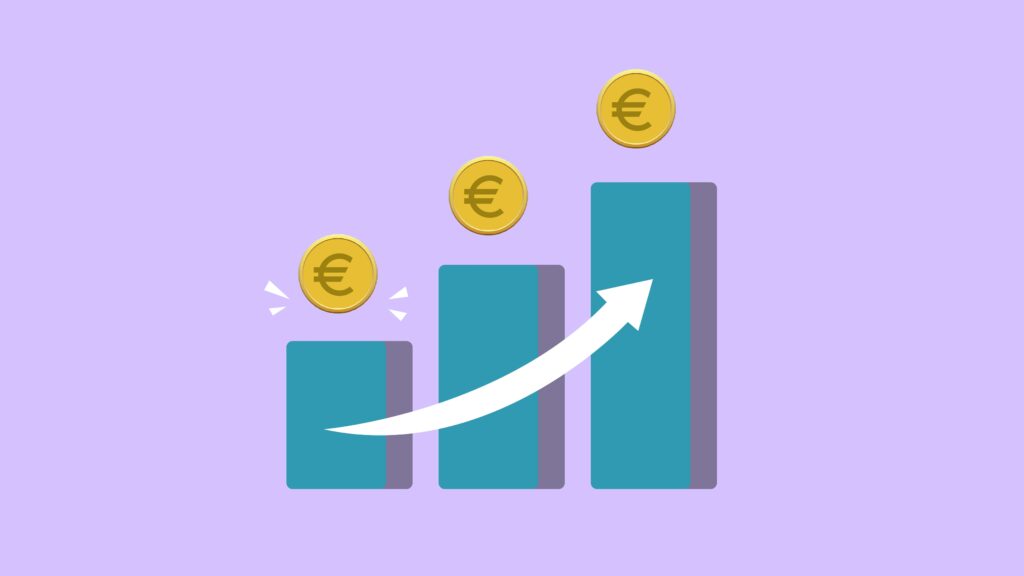
Vector illustration of income growth chart with arrow and euro coins against purple background
cro, conversion rate optimization, digital marketing, cro, cro, cro, cro, cro

Phase 2: Conversion to Cashflow

Once we find signal, the next job is to turn it into something stronger.

This is where we focus on conversion rate optimization, A/B testing, website optimization, funnel clarity, and email systems. But we are not optimizing for vanity metrics. We are looking at the full path between traffic, trust, conversion, revenue, and margin.

A lot of businesses assume the landing page is the problem. Sometimes it is. But sometimes the real issue is the offer. Or the traffic. Or the message. Or the follow-up. Or the fact that five things changed at once and nobody can tell what made the difference.

Phase 2 is about finding the leak and fixing it in the right order.

The goal is not just more conversions. The goal is more confidence in the system behind those conversions. When that happens, you can scale what is proven instead of gambling on what is loudest.

Why Most Marketing Stays Stuck

Most marketing problems are not caused by a lack of effort. They are caused by unclear feedback loops.

Owners keep testing, but the tests do not teach them anything. They spend more, but the spend does not create more certainty. They hire agencies, but nobody connects performance back to profit. They rebuild pages, launch new campaigns, or install new tools without knowing whether those moves address the real bottleneck.

That is how marketing becomes fragile.

It works when everything goes right. It works when the owner keeps watching. It works when ad costs stay manageable. But the moment conditions shift, the business feels exposed.

Our methodology is built to reduce that fragility.

We want each move to create more clarity, more proof, and more confidence in what should happen next.

What This Means for You

When your marketing has a clear system, you stop reacting to every bad day like it is a crisis.

You know which numbers matter. You know what is being tested. You know what decision a test is supposed to inform. You know whether you are on pace, ahead of pace, or behind pace toward the goal.

That does not mean marketing becomes effortless. It means it becomes manageable.

Instead of treating your ad account like a lottery, you are building a business asset. Instead of hoping the next campaign fixes everything, you are improving the path from click to cashflow one validated step at a time.

That is the difference between marketing activity and marketing direction.

Start With Your Score

The easiest place to begin is by finding where your current marketing system is leaking.

Take the free Marketing Scorecard to see what is unclear, what is costing you money, and what should be fixed first.

Discover the Path to Your First Win - Free Audit of Your Leading Webpage

Taking the first steps can be challenging – let us ease the journey. Receive a detailed audit to discover your next moves, and experience a taste of collaboration with us, all without any obligation.

AB Testing VS Mult-Armed Bandit Testing

Beyond A/B Testing – A Look At Multi-Armed Bandit Testing

When it comes to testing and analyzing the performance of your website, application, or marketing tools, you need to gain statistics on how users engage with your content in order to know how to optimize and update. As market behaviors and application use are always changing, it is important to gain insights into how your target audience is engaging with your content to better reach them with your products or services.

While the main way of testing for the best marketing strategy has been A/B Testing – an emerging testing method known as Multi-Armed Bandit Testing could offer some further insights and capabilities that A/B Testing is limited in discovering.

Basics of A/B Testing

The gold standard in the online testing market has been A/B Testing. With A/B Testing, two versions of the same website page, email, or application are built and run against one another to discover and compare the performance rates of both. With A/B Testing, the testing occurs randomly with users, with analysis of click-rates, conversions, and other behaviors driving decisions as to the best way to update and optimize the final version.

A/B Testing allows for ongoing analysis of commonly-used tools that companies use to reach clients. However, running a simple A/B testing method on each individual tool can be an extensive process – especially if you are needing to test several elements at once. To help overcome the ever-growing need to test, optimize, and upgrade, the abilities of machine-learning have been brought to testing through the process of the Multi-Armed Bandit method.

What Is Multi-Armed Bandit Testing?

Multi-Armed Bandit testing takes its name from the slot-machine world, where the “one-armed bandit” slot machine would see players pull a giant lever repeatedly to gain an unknown payout each time.

For marketing, Multi-Armed Bandit testing provides a more complex testing solution that is built upon machine-based learning algorithms. Through these AI-based solutions, you can run several options simultaneously instead of a binary option in one iteration.

For example, an online news organization may offer a variety of content for many different users. When it comes to targeting advertising and click-through posts, the standard A/B testing may not be able to give effective or efficient results in an ever-changing, multi-target audience. In this case, a testing algorithm that takes a variety of real-time options into effect is better. With Multi-Armed Bandit testing, various “arms” are pulled on the slot machine to try different outcomes at the same time. As traffic is driven to a variety of options, various outcomes are offered for what content is best for that particular use.

A/B Testing vs. Multi-Armed Bandit Testing

So which version of testing is best for your business’s needs? In choosing between an A/B testing or Multi-Armed Bandit method, you essentially choose between “exploitation” and “exploration”. With A/B testing, your outcomes are limited by traffic being allocated between only two versions of an option. Once one version emerges as a leader, you will often move solely in that direction – which may mean that resources were wasted on the other version’s creation and implementation.

To overcome this limitation, the Multi-Armed Bandit method is more adaptive and flexible through the machine-learning involved. Instead of relying on a binary choice, various scenarios are explored with a different amount of traffic to each. This leads to a variety of “winning” options that can emerge with much more complex statistical analysis available. As the machine learns which option is most effective in real-time, you don’t risk wasting traffic resources on a “losing” method that you will never implement.

Multi-Armed Bandit Algorithms

While Multi-Armed Bandit testing sounds like a great option, it does contain quite a bit of complexity in the ways that the testing operates – which can make the process difficult for those without experience in the method. In order to overcome the complexity that can exist in the Multi-Armed Bandit testing strategy, computer scientists have developed three algorithms to help give quality results:

Epsilon-Greedy

The Epsilon-Greedy method is a machine-learning algorithm that tries to draw a balance between the concepts of “exploration” and “exploitation”. At its most basic understanding, the Epsilon-Greedy algorithm operates by pulling the highest-payout lever most often, while a random lever is pulled a fraction of the time.

Upper Confidence Bound

Based on a principle known as “Optimism In the Face of Uncertainty”, the Upper Confidence Bound strategy makes an assumption that the payoff of each arm will result in the highest payoff based on previous data on the test.

Thompson Sampling (Bayesian)

The Thompson Sampling method uses a randomized probability matching strategy that tries to match the consistency of the “lever pulls” with a statistical probability that the use of that level would be the best and most optimal choice.

Ways To Use Multi-Armed Bandit Testing

Looking for some examples of the best way to use Multi-Armed Bandit testing? Here are some great times to use this strategy over common A/B testing:

Short-Term Marketing Campaigns

If you are working with a limited-time marketing opportunity, A/B testing could cost you valuable time waiting for results. With real-time bandit testing, you could run your campaign tests and implement results quickly.

Continuous Exploring For Changes in Live Marketing

When you have a marketing element that is needing to be tested many times over a period of time, bandit testing provides a great opportunity to run a long-term test over rerunning an A/B test over and over.

Targeting & Learning Based On Common Users

Another great way to use Multi-Armed Bandit testing is with testing content for a specific or target audience. The machine-learning involved with bandit testing can quickly pick up and adapt to common user behavior while spending fewer resources on less-valuable user actions.

Learn More About Marketing Testing For Your Company or Business with Mach7Marketing

Want to learn more about A/B Testing, Multi-Armed Bandit Testing, and many other methods for helping your company or organization build successful marketing strategies? Check out Mach7Marketing – a full marketing team built by industry experts who are focused on helping your team find the best solutions for your industry. Check out more online today.

Share the Post:

Related Posts

Ready to Skyrocket Your Conversions?

We use a variety of digital mediums to increase web presence and generate leads.